Summer Jobs in the Netherlands – 2026 Season
Work. Earn. Explore!
Are you looking for an exciting summer job abroad? Join us in the Netherlands for the 2026 season and experience a fantastic opportunity to work, earn, and meet new people!
🔹 Job Roles Available:
We offer various positions in:
✅ Logistics 📦
✅ Production 🏭
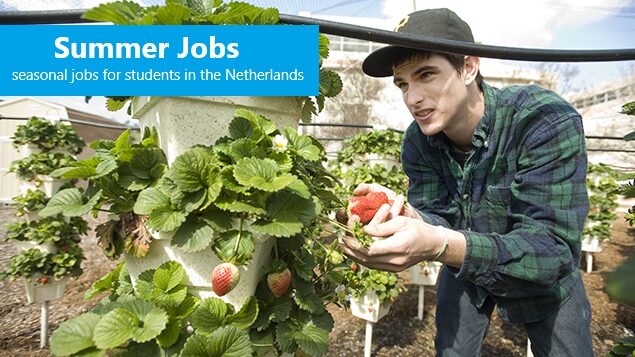
✅ Agriculture 🌱
🔹 What We Offer:
✔ Guaranteed Accommodation 🏠 (fully arranged)
✔ Free Transport 🚐 to work and back
✔ Attractive salary 💰 (weekly or monthly payments)
✔ Contracts for 2-3 months – ideal for students 🎓
✔ Work with friends or as a couple 💑👫
🔹 Job Locations:
🌍 Various cities: Amsterdam, Eindhoven, Venlo, Veghel, Nijmegen, and more!
🔹 Requirements:
✅ English language skills (B1 level or higher)
✅ Availability for 2-3 months (May - September 2025)
✅ Motivation & willingness to work
💡 Perfect summer job for students, travelers, and adventure seekers!
📩 APPLY NOW and secure your spot for summer 2025!
For more details or to submit your application, contact us today!
🌍 Work. Travel. Experience. 🌍
New Exciting Job Opportunities in the Netherlands!
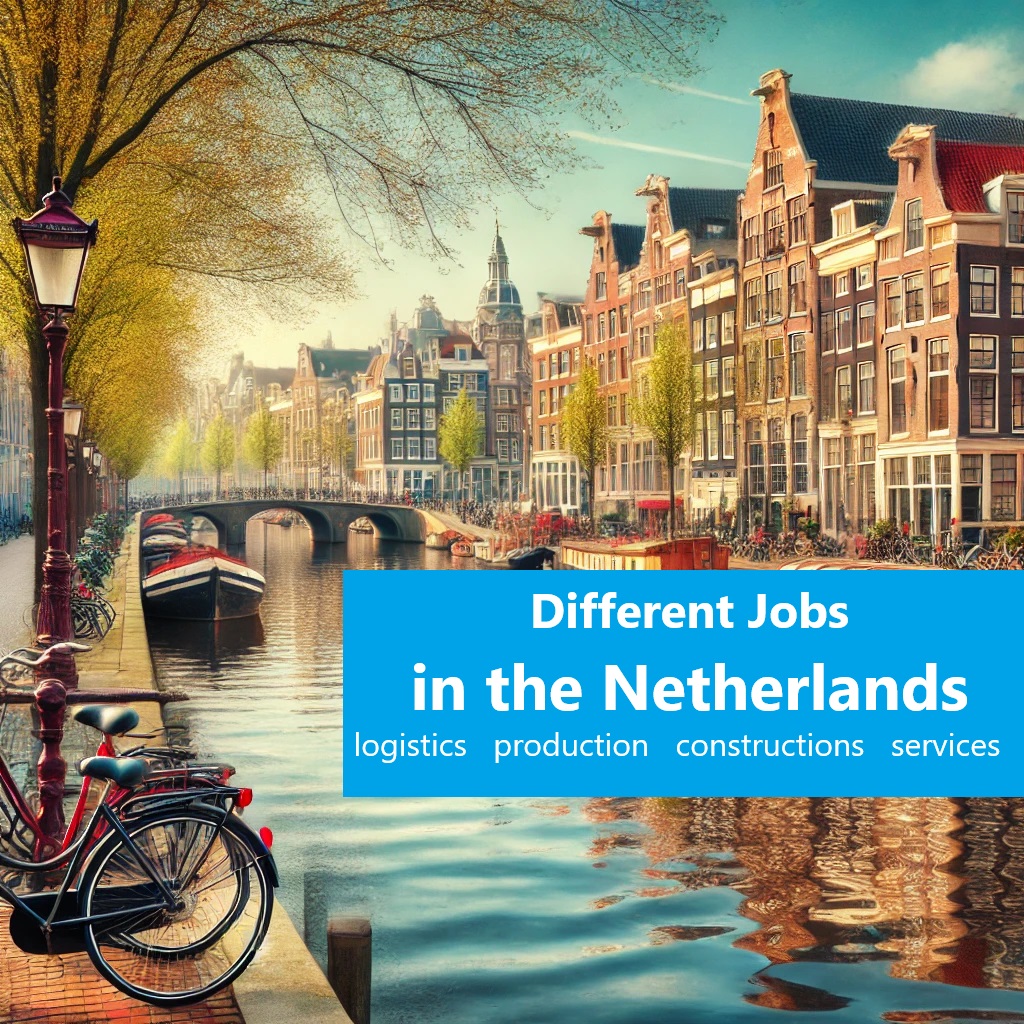
Are you ready to kickstart your career and experience life in the Netherlands? We have a variety of job openings available across different sectors including logistics, production, construction, and services. Whether you’re skilled in your field or looking to start fresh, we have something for everyone!
SEE ALL JOB OFFERS AVAILABLE THIS WEEK
What We Offer:
Comfortable Housing: Moving to a new country can be challenging, but we make it easier by providing comfortable, fully equipped accommodation. You’ll feel right at home from day one.
Transportation Provided: Forget the hassle of commuting. We organize transportation to and from your workplace, so you can focus on your job.
Diverse Job Opportunities: With positions available in logistics, production, construction, and various service industries, there’s a role waiting for you. Whether you’re looking for warehouse work, production line jobs, construction projects, or service roles, we’ve got you covered.
Work with Friends or as a Couple: Don’t want to move alone? No problem! We offer the possibility to apply and work together with friends or your partner, making your experience even more enjoyable.
Competitive Pay & Growth: Enjoy fair wages with opportunities for growth and development in your career. The Netherlands is known for its worker-friendly environment and balanced work-life culture.
Who We're Looking For:
- Motivated individuals looking for steady work in a dynamic and international environment.
- Those with experience in logistics, production, construction, or services are highly encouraged to apply, but we also have positions available for entry-level candidates.
- Flexible and team-oriented individuals ready to work in a multicultural environment.
- EU citizens or those with a valid work permit for the Netherlands.
Why Work in the Netherlands?
The Netherlands offers a fantastic work-life balance, excellent labor conditions, and the chance to live in a beautiful and vibrant country. By joining us, you’ll not only enjoy a great job but also experience Dutch culture, friendly locals, and an international community.
Order picker at Hobij, Sligro
About
Sligro is the market leader in the food service wholesale market. It isn’t without reason that craftsmanship is of paramount importance. As an employee, you feel like an entrepreneur within your own field and you make an important contribution to the overall result. Together, we make it a success with enthusiasm and the will to win.
The working environment is really good, with friendly colleagues. Sligro will take time to explain the job to you, and you will have a buddy at the start who will guide you on the work floor. Sligro has well-equipped canteens where lunch doesn’t cost much. You can get coffee, tea, and soda beverages for free in the canteen, as well as free fresh fruit every day.
Responsibilities
What are you going to do?
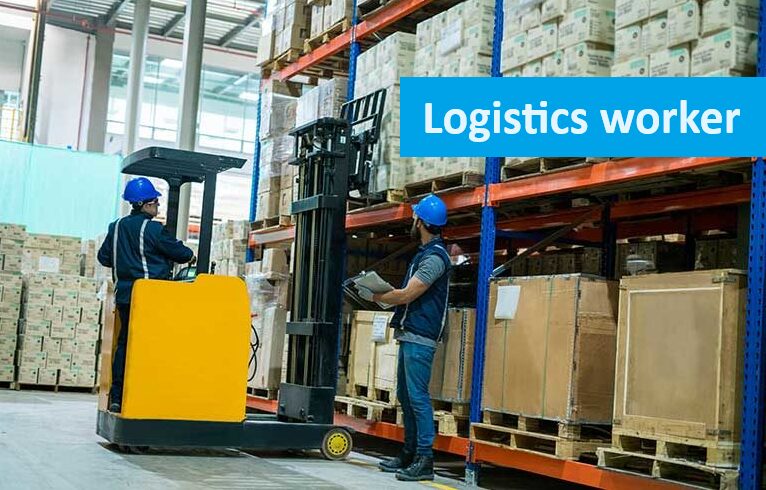
With the help of a low-level order picking truck and a Bluetooth finger scanner, you drive through our logistics center to collect products for our customers. Through the screen on your collection truck, you receive collection orders and collect for several customers at the same time. Thanks to your fast and accurate approach, you ensure that our customers receive their orders on time.
Collecting food and non-food products using an electric collection truck and a finger scanner
Checking whether you have collected the correct products
Placing the collected products correctly for your colleagues in expedition
Keeping your workplace clean
Some orders are collected in a cooled environment
Requirements
You speak English at B1 level
You have at least 6 months of experience in logistics
You are in good physical condition
It is a plus if you have a driving licence
It is a plus if you have your own house
Location
The Netherlands
Company name (uitzendbureau)
HOBIJ

Top Dutch Agencies for Logistics & Production Jobs
Looking for work in the Netherlands, especially in logistics, warehouse, or production sectors? Using a staffing agency can be one of the easiest ways to get started. Many Dutch employment agencies don’t just connect you with jobs—they also provide housing, transport, and assistance with important documents, which is especially helpful if you’re moving from another country or starting a temporary position.
Whether you’re looking for flexible work, seasonal jobs, or long-term positions, these agencies can simplify the hiring process, handle administrative paperwork, and support you as you start your new role. This makes working in the Netherlands more accessible, safe, and convenient.
Below is a list of the top 20 agencies that specialize in logistics, production, warehouse, and industrial jobs across the Netherlands.
Top 20 Employment Agencies in the Netherlands for Logistics and Production Jobs
Randstad Netherlands – A major international staffing agency with a wide network of logistics, warehouse, and production roles throughout the country. Ideal for temporary and permanent positions.
-
Adecco Netherlands – Offers production and logistics jobs for entry-level to mid-level candidates, with opportunities for both temporary and permanent contracts.
-
Manpower Netherlands – Strong in industrial, logistics, and warehouse staffing. Provides flexible and permanent contracts, making it a reliable choice for many workers.
-
Luba Uitzendbureau – A regional agency with opportunities in manufacturing, warehouse operations, and light industry. Particularly useful for local placements.
-
Tempo-Team – Well-known for temporary logistics, warehouse, and production work, making it a go-to agency for those looking for flexible jobs.
-
Unique Netherlands – Mainly focuses on administrative roles but also offers logistics and warehouse positions for candidates with broader interests.
-
Olympia Uitzendbureau – Provides both temporary and permanent production and logistics jobs across various regions, catering to a wide range of workers.
-
T&S Flexwerk (Tensflexwerk) – Specializes in flexible work within logistics, production, and warehouse sectors. Many positions also come with housing and transport support, which is especially helpful for international workers.
-
HOBIJ – Focuses on technical, production, and industrial roles. Great for candidates with technical skills or those wanting to work in manufacturing and logistics.
-
Covebo NL – Targets warehouse, logistics, and production roles, including entry-level jobs for newcomers to the sector.
-
Flexcraft – Provides opportunities in production, light industry, and logistics. Ideal for those seeking temporary or flexible positions.
-
DailyFlex – Specializes in temporary logistics, production, and seasonal work, often in warehouses or agricultural sectors.
-
SBA Flex – Known for flexible production and warehouse staffing, offering quick placement options.
-
Eurojob NL – Focuses on hands-on work in logistics and production, providing quick employment opportunities for candidates ready to start immediately.
-
Wiertz Company – Covers warehouse, logistics, and production roles, as well as some service and hospitality work, making it versatile for job seekers.
-
ABflexkracht – Provides staffing solutions for production and logistics sectors, supporting both temporary and permanent contracts.
-
RGF Staffing (formerly USG People) – Covers logistics, manufacturing, and production jobs along with other sectors, offering a wide range of opportunities.
-
Start People – Reputable for both temporary and permanent positions in logistics, production, and warehouse roles, helping candidates find stable employment.
-
Otto Workforce – Well-known for staffing distribution centers, warehouses, and logistics operations, often providing opportunities for international workers.
-
UBN Uitzendbureau – Specializes in blue-collar work, including production, logistics, and warehouse roles, with support for flexible or temporary employment.
Working in the Netherlands through a staffing agency is one of the easiest ways to start a job in logistics, production, or warehouse sectors. Agencies not only connect you with employers but often provide housing, transport, and help with important documents, making the relocation and onboarding process much smoother.
To simplify your job search even further, you can connect to multiple agencies at once through the We Relocate platform. With just one click, you can submit your profile to several agencies and increase your chances of landing the right position quickly. Try it HERE and start your journey toward a logistics or production job in the Netherlands today!
Homebuyers in the Netherlands Now Need €160,000 in Savings to Afford a Hous
As house prices in the Netherlands continue to climb, buying a home is becoming increasingly difficult for many Dutch residents. According to research by price comparison site Independer, prospective homeowners now need an average of €160,000 in savings to cover the gap between what banks are willing to lend and the actual cost of houses.
Why Homes Are So Expensive
The average house in the Netherlands currently costs over €520,000, while the typical mortgage a buyer can secure is only about €360,000. This leaves a significant shortfall that must come from personal savings, which has grown 28% in just six months. Despite these high costs, demand remains strong, with mortgage applications rising 20% in the third quarter of 2025.
Experts say several factors are driving the price surge: a long-standing housing shortage, low interest rates over previous years, and high demand in urban areas like Amsterdam, Rotterdam, and Utrecht. Even with these pressures, buyers continue to enter the market, partly because renting has also become expensive, leaving homeownership as the preferred long-term option.
Dual-Income Households Have an Edge
Couples and dual-income households are better positioned to handle the rising costs. They can typically borrow around €475,000, leaving a smaller gap of about €45,000 to cover with personal savings. Mortgage expert Marga Lankreijer-Kos notes that since not every home costs €520,000, dual-income buyers can still find opportunities in the market, especially for smaller homes or properties outside city centers.
Single-Income Buyers Struggle
Single earners face far steeper challenges. With mortgages averaging just over €300,000, they can afford only about 2% of homes on the Dutch market. Competition is fierce, as they are often bidding against couples or families with higher combined incomes, making it increasingly difficult to secure a property without substantial savings.
Housing Shortage Shows No Signs of Easing
The Netherlands continues to face a severe housing shortage, with new construction often falling short of government targets. Urban areas are particularly affected, and waiting lists for affordable housing remain long. Lankreijer-Kos advises buyers to use as much of their own funds as possible and to explore programs aimed at first-time buyers, former students, or smaller-scale developments.
Additionally, consulting local mortgage advisors is recommended, as they are typically well-informed about recent developments in the housing market and can provide practical guidance on navigating competitive conditions.
The Bigger Picture
This trend highlights broader challenges in the Dutch housing market. Rising house prices combined with mortgage limits mean that homeownership is increasingly out of reach for single earners and low- to middle-income households. Analysts warn that without a significant increase in new housing supply and targeted policy interventions, these affordability issues are likely to persist for years to come.

Over 200,000 Homes Empty in the Netherlands
Despite a growing housing shortage, the number of empty homes in the Netherlands keeps rising. Statistics Netherlands (CBS) reports that over 200,000 homes were vacant this summer, a 3% increase since the start of the year.
Vacancy numbers rising
On January 1, 2025, there were 194,500 empty homes. By July 1, this rose to 200,670—equivalent to 21.5 million square meters.
The largest cities have the most vacant homes:
-
Amsterdam: 21,770
-
Rotterdam: 10,870
-
Eindhoven: 4,000
-
The Hague: 2,640
Most homes do not stay empty for long. At the start of 2025, only 64,360 homes had been unoccupied for more than a year.
Government plans vacancy tax
To reduce vacancies, the Dutch government has approved a tax on homes empty for more than a year. The Association of Municipalities (VNG) hopes cities can start using it soon.
Municipalities can use energy consumption data to check if a property is truly vacant. Amsterdam is also planning a permit system for second homes starting in 2026 to reduce empty houses.
Criticism of the tax
Some experts argue the tax may not solve the problem. Edward Touw of VastgoedBelang says delays often come from municipalities, not landlords. Renovation permits or rules about dividing buildings into smaller homes can leave properties empty for long periods.
Housing expert Peter Boelhouwer adds that most empty homes are not intentionally left vacant. Some are being renovated, or heirs of deceased owners cannot find a solution.

The Netherlands to Boycott Eurovision 2026 Over Israel’s Participation
The Netherlands will not take part in the Eurovision Song Contest 2026. Dutch broadcaster AVROTROS pulled out after the contest organizers confirmed that Israel would still be allowed to compete.
Why the Netherlands is withdrawing
Several Dutch broadcasters, including AVROTROS, wanted Israel banned from Eurovision because of the ongoing war in Gaza.
AVROTROS CEO Taco Zimmerman said in a statement:
"This was not an easy decision. Eurovision is very important to us, but culture does not come at any cost. Last year’s events crossed our boundaries. Core values like humanity and a free press cannot be compromised."
The broadcaster also mentioned political interference in last year’s contest. Israel, which finished second, ran government campaigns encouraging people in other countries to vote for its entry. AVROTROS said staying true to its values as a public broadcaster was more important than participating.
Even though the Netherlands will not compete, the national broadcaster NPO will still broadcast the event to Dutch viewers.
Other countries pulling out
Besides the Netherlands, Spain, Ireland, and Slovenia will also skip Eurovision 2026. Spain’s broadcaster RTVE has traditionally been a major supporter of Eurovision. Iceland and Belgium are still deciding whether they will participate.
The decision to allow Israel to compete was made under pressure at a meeting of European broadcasters in Geneva. Some countries opposed Israel’s participation, while others, like Germany and Austria, strongly supported it. Austria, which will host the 2026 contest in Vienna, said excluding Israel was "unthinkable" given its own history.
New voting rules coming
To prevent vote manipulation, Eurovision plans to introduce new rules for 2026. Media campaigns will be limited, and viewers will only be able to cast 10 votes per person, instead of the previous 20.

Join Our Logistics Team – Order Pickers Needed Across the Netherlands
Locations: Tilburg, Veghel, and several other logistics hubs
Salary: From €14.40 per hour, depending on experience
Start Date: Flexible – start whenever you’re ready
Partner: Want2Work (accommodation & transport arranged)
Are you ready for a fresh start in the Netherlands? We’re looking for motivated Order Pickers to join leading logistics companies across multiple cities. Whether you're experienced or just getting started in warehouse work, this role offers stability, support, and the chance to build a dependable career.
Our recruitment partner Want2Work will take care of your accommodation and daily transport, so you can focus on your job and settling into life in the Netherlands with confidence.
What You’ll Be Doing
As an Order Picker, you’ll be a key part of the warehouse operations. Your tasks may include:
-
Collecting, scanning, and preparing orders with accuracy and speed
-
Working with handheld scanners, warehouse management systems, and basic machinery
-
Ensuring all items are correctly packed and prepared for shipment
-
Keeping your work area organized and maintaining safety guidelines
-
Collaborating with a diverse international team
This is a dynamic role suited for people who enjoy active work, teamwork, and structured routines.
What We Offer
-
Competitive hourly wage starting at €14.40 (higher depending on experience)
-
Reliable accommodation arrangements provided by Want2Work
-
Daily transport to and from work
-
A supportive team that helps you get settled quickly
-
Opportunities for long-term contracts, internal growth, and skill development
-
Multiple warehouse locations to match your preference
Requirements
To be successful in this role, you should have:
-
English communication skills (required for work and safety instructions)
-
EU nationality (essential for legal employment and registration in NL)
-
Motivation to work in a fast-paced warehouse environment
-
Ability to work shifts depending on location
-
A driving licence is a strong advantage, but not mandatory
Why This Job?
This role is ideal for people seeking stability, clean accommodation, and straightforward logistics work. Whether you're relocating for new opportunities or already living in the Netherlands, you’ll be supported every step of the way.
Ready to start your next chapter? Let Want2Work guide you into a stable and well-organized logistics job—with flexibility, security, and room to grow.
Unemployment in the Netherlands Hits Highest Level in Four Years
According to new data from Statistics Netherlands (CBS), unemployment in the Netherlands has climbed to 4 percent, marking the highest rate in four years. As of September 2025, around 409,000 people in the Dutch workforce are without jobs, with unemployment increasing by an average of 8,000 people per month over the past quarter.
CBS defines unemployed individuals as those without paid work who are actively seeking employment and available to start immediately. Alongside this group, there were 3.2 million people not participating in the labour force, including retirees, students, and individuals unable to work due to illness or disability — a number that has fallen slightly in recent months.
While the number of unemployment benefit claimants has remained stable at 187,400, it represents an 8.8 percent rise compared to the same period last year. The public sector and industrial sector have seen the sharpest increases in benefit recipients, up 24.2 percent and 21.8 percent, respectively.
Youth Unemployment Remains Highest
Young people aged 15 to 25 continue to face the highest unemployment levels, with 8.8 percent currently jobless — a slight decrease from 9 percent a year ago. However, unemployment among older age groups is on the rise: 3.4 percent of 25- to 45-year-olds are unemployed (up from 3.1 percent last year), and 2.6 percent of those aged 45 to 75 are without work (up from 2.1 percent).
CBS attributes the rise in unemployment to two main factors: job losses and an increasing number of people entering the labour market, such as recent graduates. Economist Hein van Mulligen notes that while more people are actively seeking jobs, “those who are unemployed still have a good chance of finding new work in the current labour market.”

Jobs for Multilinguals in the Netherlands 🇳🇱
Are you fluent in more than one language and ready to take your career to the next level?
We’re looking for multilingual talent to join international companies across the Netherlands!
Available positions:
💬 Customer Service & Support
💼 Sales & Account Management
💻 IT & Tech Support
🧾 Administration & Back Office
Whether you speak German, French, Spanish, Italian, Polish, Nordic languages, or others, your language skills are in high demand!
What we offer:
-
Exciting opportunities in international environments
-
Competitive salaries and relocation assistance (for eligible candidates)
-
Career growth and training opportunities
-
A chance to live and work in one of Europe’s most vibrant and diverse countries
Use your language. Build your career. Experience the Netherlands!
REGISTER

Dutch Staffing Sector: Recovery Pushed Back to 2026
The Dutch flexible employment market — which includes temporary work agencies, secondment agencies, and payroll services — has faced two years of falling hours. That decline seems to have stopped in 2025, but according to forecasts, a real rebound won’t arrive until 2026.
Why recovery is delayed
Even though the economy is improving, businesses remain careful in their use of flexible staff. Ongoing geopolitical tensions, tighter regulations, and structural shortages in the labour market are holding back growth.
End of bogus self-employment changes the market
At the start of 2025, the government restarted enforcement against bogus self-employment. Many freelancers who were effectively working as employees can no longer continue under self-employed contracts. This shift has pushed companies to either hire these workers on permanent contracts or bring them in via staffing agencies. Data from Statistics Netherlands shows that in the second quarter of 2025, more than a third of freelancers stopped working independently, with over half of them moving into permanent or flexible jobs.
Labour shortages still the biggest problem
Nearly half of Dutch staffing firms report shortages — both in their own teams and in the pool of temporary workers. This bottleneck limits the supply of new temps and slows overall growth. Agencies are responding by investing more in training and development to attract and retain staff, but mismatches between available skills and market demand remain a challenge.
New laws make temp work costlier and less flexible
The More Security for Flex Workers Act, scheduled to take effect on 1 January 2026, will give temporary agency workers the same rights as employees on permanent contracts. This includes pensions and transition payments. The law is meant to ensure that temporary contracts are only used for short-term peaks or sick leave, not for ongoing work. For employers, this will make temp workers more expensive and reduce flexibility.
A need for change in the industry
Given the combined pressures of economic uncertainty, regulatory tightening, and staff shortages, many staffing companies will need to rethink their strategies. Instead of focusing only on traditional temp placements, agencies are encouraged to broaden their services — such as offering training, career guidance, and support for older workers or those needing reskilling. By acting as HR advisors and mobility facilitators between sectors, staffing firms can build stronger client relationships and provide greater long-term value.

Good News: Employers May Soon Pay for Your Dutch Lessons
If you are an international worker in the Netherlands, there may soon be good news for you. The Advisory Council on Migration — an independent body that advises the Dutch government — has suggested new measures to help migrant employees settle more successfully. Their main message: employers should pay for Dutch language lessons and give workers time to attend them, even during working hours.
Why Dutch lessons are important
Learning Dutch is one of the biggest challenges for many international employees. Without the language, it can feel difficult to connect with colleagues, make friends locally, or understand your rights at work. The council points out that many migrant workers don’t just come to the Netherlands for a short period — a large number end up staying:
-
34% of EU workers remain in the Netherlands after five years.
-
50% of non-EU workers also stay beyond five years.
This means many migrant workers are building their futures here, and better Dutch language skills could make a huge difference in daily life and career opportunities. According to the council, “A better understanding of Dutch is essential for migrant workers to use their skills and qualifications effectively and for their further career development.”
What the council is asking for
The proposal goes further than just language classes. It is part of a broader plan called a National Coexistence Programme, which would bring together the government, municipalities, employers, and social organisations to improve integration. The main ideas include:
-
Free or employer-paid Dutch lessons for migrant workers.
-
Time during working hours so employees can actually attend lessons.
-
Clearer, simpler communication about your rights and obligations as a worker.
-
Better support for career growth, so that migrants can use their skills fully.
-
More opportunities for interaction between Dutch and international workers, such as community events or workplace activities.
The council also suggested local councils set up physical meeting points where internationals can get information and join activities that are open to everyone, not only to migrants.
Support from politics and government
Several Dutch political parties — including PVV, VVD, NSC, and BBB — have already said they agree with the idea that companies should encourage workers to learn Dutch. The Minister of Social Affairs and Employment, Eddy van Hijum, has also spoken in favor of this kind of plan. He explained that if more migrant workers learn Dutch and feel at home in the Netherlands, they are more likely to stay. This, in turn, helps reduce worker shortages in many sectors.
The government has already taken steps in this direction earlier in 2025 by adding language requirements to a new integration plan. This new advice from the council could push the plans further, placing more responsibility on employers to support their international staff.
What this could mean for you
If these recommendations are accepted, you as a migrant worker could:
-
Take Dutch lessons paid for by your employer.
-
Learn Dutch during working hours, not only in your free time.
-
Receive clear information about your job rights and obligations in a language you understand.
-
Get more chances to develop your career and move into better positions.
-
Feel more included, both at work and in your community.
Bottom line
The Netherlands relies heavily on international employees — around 1 in 10 workers in the country is a labour migrant. Since so many stay longer than expected, the government and employers are being asked to do more to help migrants settle. If these proposals are adopted, learning Dutch may no longer be your personal struggle or expense, but something your employer helps you with — making life and work in the Netherlands much easier.
✅ In short: The Dutch government is being advised to make employers pay for Dutch lessons and give you time to take them. This could open the door to better jobs, easier daily life, and a stronger sense of belonging.

What Workers in the Netherlands Need to Know About Labour Law Changes
Several new rules are being introduced in 2025, and more are planned for 2026. These changes are meant to give workers more security and reduce unfair practices. Here’s what it means for you:
Already in effect (2025)
-
No more bogus self-employment
If you’re treated like a freelancer but really work like an employee, the tax office is checking more closely. From January 1, 2025, enforcement is back. There’s a one-year transition: no fines if your employer is fixing it, but after that, action will be taken. -
Changes to the 30% ruling
If you came to the Netherlands for work and get the 30% tax-free allowance:-
For contracts starting after Jan 1, 2024, the 30% stays until the end of 2026, then drops to 27% from Jan 1, 2027.
-
If your contract started before 2024, nothing changes — you keep the 30%.
-
-
Stricter rules for foreign workers
To get or keep a Dutch work/residence permit, you need to earn above a certain salary. If your income falls below the threshold, you may lose your permit. This applies to non-EU/EEA and Swiss nationals. -
Bigger fines for illegal work
From Feb 1, 2025, if a company hires people without a valid permit, they can be fined up to €11,250 per worker (higher if there’s exploitation involved).
Coming soon (expected Jan 1, 2026)
-
Clearer rules on employment status
If you earn €32.24/hour or less, the law will assume you’re an employee. The employer has to prove otherwise if they claim you’re a freelancer. -
Non-compete rules changing
Employers won’t be able to “lock you in” for too long.-
Max duration = 12 months
-
They must clearly explain why and where it applies (geography)
-
They must pay you 50% of your monthly salary for every month it restricts you from working elsewhere.
-
-
More security for flexible workers
-
Zero-hours and min-max contracts will be replaced by basic contracts with guaranteed weekly hours.
-
Employers cannot force you to work outside your contract hours.
-
Temporary contracts will be restricted: after three in a row, employers must wait five years (instead of six months) before offering another temporary contract.
-
Agency workers will also gain stronger rights.
-
✅ Bottom line:
If you’re a flex worker, freelancer, or on a temporary contract, the law is moving in your favor. You’ll get more certainty in your hours, stronger protections if you’re wrongly called a freelancer, and fairer treatment if you face non-compete restrictions.

Big Changes Ahead for Flexible Work in the Netherlands
The Dutch government has introduced a new law called “More Security for Flexible Workers” (Wet meer zekerheid flexwerkers). The goal is to make work more stable and fairer for people on temporary or flexible contracts. If approved, most of the changes will start in January 2027, with some earlier in 2026.
What this means for workers:
-
No more zero-hours contracts
Current on-call contracts (like zero-hours or min-max) will disappear. Instead, there will be a new basic contract with a guaranteed number of paid hours each week. Your employer can schedule up to 30% more hours, but you will always have a secure minimum. -
Faster path to permanent contracts
Right now, temporary contracts can continue for up to three years, and then start over again after a six-month break. Under the new law, the break will be extended to five years, making it harder for employers to avoid giving permanent jobs. -
Agency workers get more rights
If you work through an agency, you will be able to get a permanent contract much sooner — after three years, instead of the current 5.5 years. -
Equal pay coming sooner
Agency workers should also receive equal pay compared to directly employed colleagues. This part of the law is expected to start earlier, in January 2026.
Why this matters
The changes are designed to reduce insecurity for flexible workers, giving you more stable income, fairer treatment, and better chances of getting a permanent job.

Workers in the Netherlands Less Likely to Switch Jobs Amid Economic Uncertainty
A recent survey by the Dutch employers’ association AWVN shows that employees in the Netherlands are becoming more cautious about changing jobs due to the current economic climate. While the number of available jobs has grown steadily in recent years, that growth is now slowing, and both workers and employers are adjusting their behavior accordingly.
Falling staff turnover
The AWVN survey, which gathered responses from around 150 large Dutch companies and institutions, found that in many sectors it has become easier for employers to retain staff. International political tensions — such as policies from the United States — combined with rising company closures have created an atmosphere of economic uncertainty. As a result, the labour market is “cooling,” and both businesses and employees are showing greater caution.
Instead of seeking new opportunities, many workers now choose to remain with their current employer. When staff do leave, it is often because they are attracted by more favorable working conditions, better opportunities for advancement, or more flexible working hours elsewhere. Despite the slower turnover, however, eight out of ten employers still face staffing shortages. Demand remains particularly high for candidates with vocational training (MBO) and relevant experience, especially in technology, production, and ICT-related fields.
Job creation slows down
The Employee Insurance Agency (UWV) predicts that job growth will continue to decline in the coming years. Between 2020 and 2022, the Netherlands saw an increase of around 600,000 jobs, followed by another 300,000 between 2022 and 2024. From 2024 to 2027, that figure is expected to fall sharply, with just 100,000 new jobs being created.
Rising wages, higher transportation costs, and more expensive raw materials are making it harder for companies to expand. This has led to hesitation when it comes to hiring additional staff, particularly in the chemical industry, electrotechnical sector, and transport and storage. Still, not all sectors are affected equally. Information and communication services, as well as healthcare, are expected to continue seeing demand for new employees, while agriculture and wholesale are likely to contract further.
A cautious outlook
In short, while the Dutch labour market remains tight, the balance is shifting. Employers are finding it slightly easier to keep their workforce, and employees are holding on to secure jobs rather than taking risks in uncertain times. At the same time, job growth is slowing, meaning the coming years may bring more structural changes to the Dutch economy and workforce.

Dutch Purchasing Power Records Biggest Growth Since 2001
According to new figures released by Statistics Netherlands (CBS), purchasing power in the Netherlands rose significantly in 2024, marking the largest increase since 2001. On average, Dutch residents experienced a 3.6 percent improvement in their purchasing power compared to the previous year. This sharp rise can largely be attributed to wages negotiated under collective labour agreements, which increased by 6.8 percent — the biggest contractual wage rise in more than four decades.
Despite this overall positive development, the growth was not evenly distributed across different groups in society. Employees in particular benefited the most. Their purchasing power rose by an average of 5.3 percent, after accounting for inflation of 3.1 percent, which means workers saw their real wages increase by around 3.7 percent. The rise in the labour tax credit also contributed to these gains. Many employees managed to improve their financial situation even further by switching to better-paid positions or by working more hours. Nevertheless, not everyone shared in these benefits: around one in four employees still experienced a loss in purchasing power, often because of job loss or reduced working hours.
For the self-employed, the situation was less favorable. On average, their purchasing power increased by only 3.1 percent. The modest rise was partly due to changes in tax regulations, including cuts to various deductions such as the self-employment allowance and the SME profit exemption. These reductions in tax benefits limited the positive effects of higher earnings for freelancers and business owners.
Those dependent on social benefits experienced the weakest growth. Their purchasing power rose by just 0.2 percent. A major reason for this stagnation was the removal of the government’s one-off energy allowance, which in the previous year had provided households with an average of 1,300 euros in relief. However, certain measures helped to soften the impact for this group. Increases in the minimum wage, pensions, allowances, and child-related benefits ensured that their standard of living did not deteriorate further. Pensioners, who had endured three consecutive years of decline, finally saw an improvement in their financial situation, with their purchasing power increasing by 1.8 percent in 2024.
Families with children were among those who saw the most significant improvements. Two-parent households, for example, registered an average gain of 5.6 percent. Single-parent households and families without children also saw increases, though to a lesser degree, averaging around 2 percent. These differences highlight how family composition and income sources played an important role in determining how much households were able to benefit from the general rise in wages.
In summary, while 2024 brought the largest overall rise in purchasing power in more than 20 years, the extent of the improvement varied greatly across society. Employees, especially those with children, were the clear winners, while benefit recipients and the self-employed saw only limited gains. The figures underline both the strength of wage growth in the Netherlands and the uneven distribution of its benefits.
